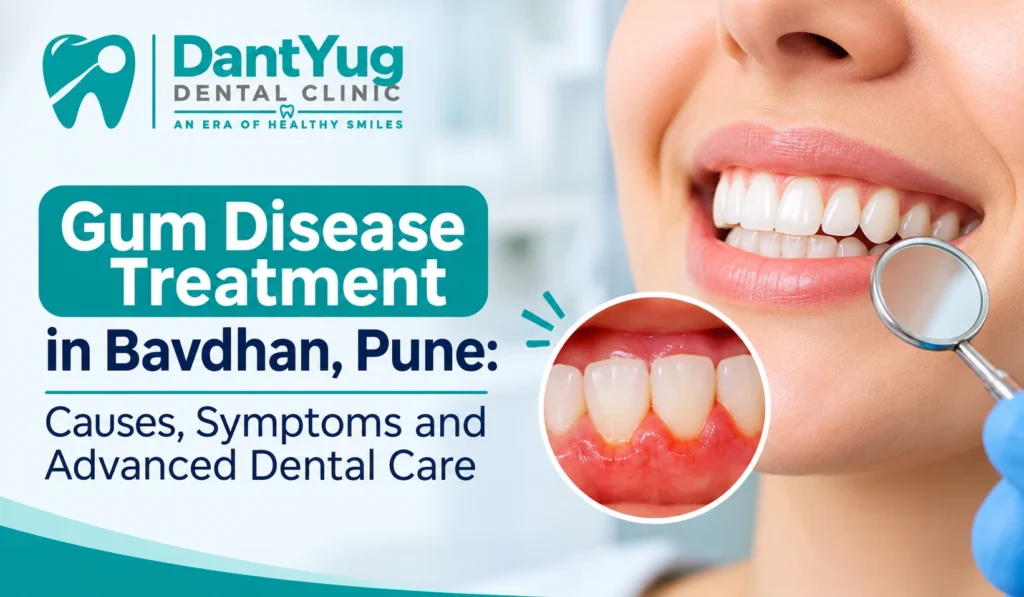
Have you noticed blood on your toothbrush, swollen gums or persistent bad breath? These may be early signs of gum disease. Although gum problems can begin without pain, ignoring them may allow the condition to progress and affect the tissues supporting your teeth.
If you are looking for gum disease treatment in Bavdhan, Pune, understanding the cause of your symptoms is an important first step. Gum disease can range from mild gum inflammation to a more advanced condition that damages the supporting bone around your teeth.
The right treatment depends on the stage of the disease, your oral health and your dentist’s examination.
This guide explains the early warning signs, common causes, modern diagnostic methods and treatment options for gum disease, along with practical steps to help maintain healthier gums.
What Is Gum Disease?
Gum disease, also called periodontal disease, is an inflammatory condition affecting the tissues that support your teeth. It usually begins when plaque, a sticky layer of bacteria, builds up around the gumline. There are two main stages. Gingivitis: This is the early stage, when the gums become inflamed, red, swollen or prone to bleeding. With appropriate professional care and effective daily oral hygiene, gingivitis can often be reversed. Periodontitis: This is a more advanced condition in which inflammation damages the tissues and bone supporting the teeth. Lost supporting bone does not normally grow back on its own, so treatment focuses on controlling the disease and protecting the remaining support. Gum disease does not always cause pain in its early stages. That is why bleeding during brushing or persistent gum swelling should not be ignored.What Are the Early Signs of Gum Disease?
The symptoms of gum disease can vary from person to person. Some common warning signs include:1. Bleeding gums
If your gums bleed while brushing or flossing, it may indicate inflammation. Occasional bleeding should not automatically be considered normal, especially if it keeps happening.2. Red, swollen or tender gums
Healthy gums are generally firm and fit closely around the teeth. Redness, puffiness or tenderness can indicate irritation or gum inflammation.3. Persistent bad breath
Ongoing bad breath or an unpleasant taste may be associated with bacteria and inflammation around the gums. If it continues despite regular oral hygiene, a dental examination can help identify the cause.4. Receding gums
When gum tissue moves away from the teeth, more of the tooth surface or root may become visible. Gum recession can have several causes, including periodontal disease and brushing habits.5. Loose teeth or changes in your bite
Teeth that feel loose, move or no longer fit together as they used to need prompt dental evaluation. These symptoms can occur when the supporting tissues have been damaged. When should you see a dentist? Arrange a dental appointment if bleeding, swelling, bad breath or gum recession persists. Seek urgent dental care for severe pain, facial swelling, fever, pus or difficulty swallowing or breathing.What Causes Gum Disease?
The most common cause of gum disease is the buildup of plaque around the teeth and gumline. If plaque is not removed effectively, it can harden into tartar, which cannot be removed with a toothbrush alone. Several factors may increase the risk of gum problems:- Inconsistent brushing or cleaning between teeth
- Smoking or tobacco use
- Diabetes that is not well controlled
- Hormonal changes, including during pregnancy
- Certain medicines that can affect gum tissue or saliva
- A family history of periodontal disease
- Dental appliances or crowded teeth that make cleaning difficult
How Is Gum Disease Diagnosed?
The first step in gum disease treatment is finding out what is happening beneath the gumline. A dentist may examine your gums, teeth and bite, ask about your medical history and check your oral hygiene routine. Depending on your symptoms, the examination may include:Gum pocket measurement
A periodontal probe may be used to measure the space between the teeth and gums. These measurements help the dentist assess gum health and identify areas that need closer attention.Dental X-rays
When clinically indicated, dental X-rays can help assess the bone supporting the teeth. They may reveal changes that are not visible during a routine examination.Review of risk factors
Your dentist may ask about smoking, diabetes, medicines, previous gum treatment and other factors that can affect gum health. These findings help determine whether the problem is gingivitis, periodontitis or another condition requiring different care.Modern Technology in Gum Disease Diagnosis and Treatment
Dental technology can help clinicians examine gum health, plan treatment and monitor changes. However, technology is most useful when it supports a proper clinical examination rather than replacing it.Digital dental X-rays
Digital X-rays can provide images of the structures around your teeth when imaging is needed. They help the dentist assess supporting bone and plan care based on the findings.Periodontal charting
Recording gum pocket measurements and other examination findings creates a baseline for comparison. At follow-up visits, the dentist can check whether the gum condition is improving or whether further care is needed.Intraoral cameras and digital imaging
Where available, an intraoral camera can show close-up views of areas inside the mouth. These images may help explain visible findings and support patient education.Ultrasonic dental instruments
Ultrasonic instruments use vibration and water irrigation to help remove deposits from tooth surfaces. They may be used during professional cleaning or periodontal treatment, depending on the patient’s needs.Laser-assisted gum procedures
Some dental practices offer laser-assisted procedures for selected gum conditions. A laser is not automatically better than conventional treatment, and it is not suitable for every patient. Ask your dentist whether it is appropriate for your diagnosis and what benefits, limitations and alternatives apply. Technology note: Confirm the equipment and procedures available at DantYug Dental Clinic before publishing specific technology claims. Do not suggest that every patient requires advanced equipment or laser treatment.What Are the Treatment Options for Gum Disease?
Gum disease treatment in Bavdhan, Pune, depends on the severity of the condition, the amount of plaque and tartar present, gum pocket measurements and whether supporting bone has been affected.1. Professional dental cleaning
For early gum inflammation, professional cleaning may help remove plaque and tartar from accessible tooth surfaces. Your dentist may also demonstrate brushing and interdental cleaning techniques to help reduce future buildup.2. Scaling and root planing
Scaling and root planing, commonly called deep cleaning, may be recommended when deposits have accumulated below the gumline. The procedure involves removing plaque and hardened deposits from affected tooth and root surfaces. Root planing smooths the root surfaces where appropriate, making it easier to maintain cleanliness. Treatment may be completed in one or more visits, depending on the areas involved and the patient’s needs. Temporary tenderness or sensitivity can occur afterward.3. Periodontal maintenance
After active treatment, some patients need regular periodontal maintenance visits. These appointments help monitor gum health, remove new deposits and identify changes before they become more difficult to manage. The interval between visits should be based on your gum condition and your dentist’s advice.4. Medication when clinically indicated
Medication may be considered in selected cases, depending on the diagnosis and the extent of infection. Antibiotics are not required for every case of gum disease and should only be used when prescribed by a qualified clinician.5. Periodontal surgery
If deep pockets or damaged supporting tissues remain after non-surgical treatment, a dentist or periodontist may recommend further treatment. Depending on the condition, this may include pocket-reduction procedures, regenerative approaches or other periodontal surgery. Surgery is not necessary for everyone with gum disease. The decision depends on the examination findings and response to initial treatment.6. Treatment for gum recession
Gum recession may need monitoring, changes to brushing habits or specific treatment to manage sensitivity. In selected cases, a gum graft or another periodontal procedure may be considered. The suitable approach depends on the cause and extent of recession, the condition of the surrounding tissues and the patient’s needs.Is Gum Disease Treatment Painful?
Many non-surgical gum treatments are performed with measures to improve comfort. Some patients experience temporary tenderness, sensitivity or mild bleeding after treatment. If deep cleaning or another procedure is needed, your dentist can explain the expected sensations, available anaesthesia options and aftercare instructions. Tell the dentist if you have dental anxiety, a sensitive gag reflex or a previous uncomfortable treatment experience. Recovery and comfort vary depending on the procedure and the condition being treated.How Much Does Gum Disease Treatment Cost in Bavdhan, Pune?
The cost of gum disease treatment depends on the type of treatment required and the extent of the affected areas. A routine professional cleaning may involve a different fee from deep cleaning, periodontal maintenance or gum surgery. Factors that can affect the total cost include:- The severity of gum disease
- The number of teeth or areas requiring treatment
- Whether X-rays or other diagnostic procedures are needed
- The number of treatment visits
- Whether additional periodontal procedures are recommended
How Can You Prevent Gum Disease?
Good daily habits can help reduce plaque buildup and support healthier gums.- Brush twice daily with a soft-bristled toothbrush and fluoride toothpaste.
- Clean between your teeth every day using floss or an appropriate interdental cleaner.
- Avoid smoking and tobacco products.
- Follow your dentist’s advice if you have diabetes or another condition that affects gum health.
- Attend dental check-ups at the interval recommended for your needs.
- Do not rely on mouthwash alone to remove plaque between teeth or below the gumline.