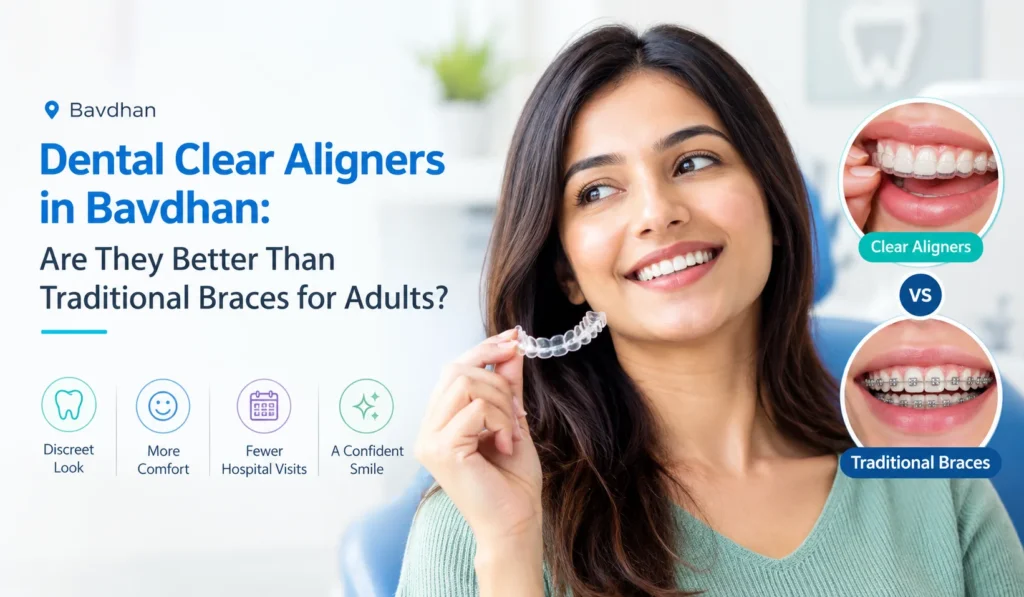
Many adults want straighter teeth but hesitate to start orthodontic treatment because they worry about the appearance of metal braces, eating restrictions or managing treatment alongside work and family responsibilities.
Dental clear aligners offer a discreet way to straighten teeth for suitable patients, while traditional braces remain an effective option for many orthodontic problems. But which treatment is better for adults? In this guide, we compare clear aligners and traditional braces, explain their benefits and limitations, discuss treatment costs and timelines, and highlight what adults should consider before choosing an option. If you are looking for dental clear aligners in Bavdhan or nearby areas of Pune, understanding these differences can help you prepare for a consultation with a qualified dental professional.Are Clear Aligners Better Than Traditional Braces for Adults?
Clear aligners may be a suitable choice for adults who want a less noticeable and removable way to straighten their teeth. Traditional braces may be more appropriate for certain complex tooth movements and bite problems. Neither option is automatically better for everyone, so the right treatment depends on a dental examination and individual treatment planning. For adults, the decision often comes down to three important questions:- Do you prefer a discreet treatment option?
- Can you wear removable aligners for the prescribed number of hours every day?
- Which treatment can address your particular tooth alignment and bite concerns?
Clear Aligners vs Traditional Braces for Adults
Both treatments aim to improve tooth alignment, but they work differently. Understanding their everyday advantages and limitations can make your decision easier.| Comparison factor | Clear aligners | Traditional braces |
|---|---|---|
| Appearance | Transparent trays are generally less noticeable | Brackets and wires are more visible, although alternatives such as ceramic braces may be available |
| Removability | Removable for meals and oral hygiene | Fixed to the teeth during treatment |
| Eating | Remove trays before meals | Certain hard, sticky and chewy foods may need to be avoided |
| Oral hygiene | Teeth can be brushed and flossed without trays | Extra care is needed around brackets and wires |
| Daily responsibility | Requires consistent wear and proper tray care | Does not depend on remembering to insert trays |
| Treatment suitability | Suitable for selected alignment problems | Can address a broad range of orthodontic problems |
| Follow-up | Requires progress reviews and possible refinements | Requires scheduled adjustments and monitoring |
| Cost | Depends on the aligner system and case complexity | Depends on the appliance, treatment plan and complexity |
What Are the Benefits of Clear Aligners for Adults?
One reason adults consider clear aligners is that they can straighten teeth without the noticeable brackets and wires associated with conventional metal braces. There are other practical advantages, too.1. A More Discreet Appearance
Clear aligners are made from transparent material and fit closely over the teeth. They are generally less noticeable than traditional metal braces, which can appeal to people who regularly attend meetings, work with customers or prefer a subtle treatment option. Although aligners are designed to be discreet, they are not always completely invisible. Some treatment plans may also involve tooth-coloured attachments or other components.2. Removable for Meals and Oral Hygiene
Clear aligners can be removed for eating and brushing. This means you can continue enjoying your usual meals without the same food restrictions that often accompany fixed braces. The important part is remembering to clean your teeth before putting the trays back in. Allowing food debris and plaque to remain trapped beneath aligners can negatively affect oral health.3. Convenient for a Busy Lifestyle
For working adults, parents and frequent travellers, removable aligners may fit more easily into everyday routines. However, this flexibility comes with responsibility. Aligners need to be worn consistently according to your dentist’s instructions. Leaving them out for extended periods can interfere with the planned tooth movements and may affect treatment progress.4. Individualised Treatment Planning
Clear aligner treatment is planned around the patient’s teeth and intended movements. Depending on the case, digital scans, photographs and other diagnostic records may be used to develop the treatment plan. The dentist also needs to evaluate your bite and oral health. Digital planning alone does not replace a proper clinical examination or guarantee a particular outcome.5. Easier Access for Brushing and Flossing
Since aligners are removable, you can brush and floss your teeth without working around brackets and wires. This can make oral hygiene more convenient during treatment. However, you still need to clean the trays as instructed, maintain regular dental check-ups and address any existing gum or tooth problems before or during orthodontic treatment as advised.Who Is a Good Candidate for Clear Aligner Treatment?
Clear aligners may be an option for adults with certain tooth alignment problems, including selected cases of mild to moderate crowding and gaps between teeth. They may also be considered when teeth have shifted after previous orthodontic treatment. The exact approach depends on the amount of movement required and the condition of the teeth and gums. You may be a potential candidate if:- Your teeth have mild crowding or spacing.
- You want to improve selected alignment concerns.
- Your gums and teeth are healthy enough for orthodontic treatment.
- You are comfortable following a prescribed daily wearing schedule.
- You can attend follow-up appointments and use retainers after treatment.
When Are Traditional Braces a Better Option?
Clear aligners are not always the most suitable choice. In some cases, traditional braces may provide better control over the movements needed to correct the problem. Fixed braces may be considered for certain complex alignment issues, significant bite discrepancies or movements that are difficult to achieve predictably with removable trays. Braces also remain attached to the teeth throughout treatment. This means progress does not depend on remembering to put them back in after meals. However, braces require careful brushing around brackets and wires. Your dentist may recommend avoiding certain foods that could damage the appliance. It is also worth knowing that there are different types of braces, including metal and ceramic options. Depending on your needs, you may have more than one treatment option to discuss. Rather than assuming that aligners are always more advanced or that braces are only for complicated cases, ask your dental professional to explain the advantages, limitations and expected outcomes of the options suitable for you.How Does Clear Aligner Treatment Work?
If you are considering clear aligners, understanding the treatment process can help you know what to expect.Step 1: Initial Dental Consultation
The process starts with an examination of your teeth, gums and bite. Your dentist will ask about your concerns, dental history and what you hope to achieve from treatment. This assessment helps determine whether orthodontic treatment is appropriate and whether clear aligners are a suitable option.Step 2: Dental Records and Treatment Planning
Depending on your case, the dentist may recommend digital scans, photographs, X-rays or other diagnostic records. These help assess tooth positions and plan the required movements. You should receive an explanation of the proposed treatment, possible limitations, expected duration and costs before deciding whether to proceed.Step 3: Custom Aligners and Wearing Instructions
If clear aligners are suitable and the treatment is undertaken, custom trays are prepared according to the treatment plan. You will receive instructions on how long to wear each set, when to change trays and how to clean and store them. Follow your treating professional’s schedule rather than changing trays earlier on your own.Step 4: Progress Reviews
Regular reviews help the treating professional check how your teeth are responding. Depending on your progress, adjustments to the plan or additional aligner trays may be required. Contact your dentist if a tray does not fit as expected or you experience a concern that does not settle.Step 5: Retainers After Treatment
Completing active treatment does not mean your teeth can never shift again. Retainers are commonly recommended to help maintain the new positions. Your dentist will explain which type of retainer is appropriate and how often you need to wear it.How Much Do Dental Clear Aligners Cost in Bavdhan?
The cost of dental clear aligners in Bavdhan can vary from one patient to another. There is no single price that accurately reflects every treatment plan. Several factors may influence the total fee:- Complexity of the case: Minor spacing may require a different treatment plan from more involved crowding or bite corrections.
- Type of aligner system: Fees may differ depending on the system used and the treatment arrangements.
- Treatment duration: The number of trays, progress reviews and any additional refinements may affect the overall cost.
- Additional care: Retainers, follow-up appointments and other clinically necessary procedures may be charged separately, depending on the clinic’s fee structure.
How Long Does Clear Aligner Treatment Take for Adults?
There is no single treatment duration that applies to every adult. Some straightforward alignment problems may require less time than cases involving more extensive tooth movements. The expected duration depends on the complexity of your case, the treatment plan and how consistently you wear your aligners. Your treatment may also take longer if trays are not worn as prescribed or if additional refinements are needed. During your consultation, ask your dentist for an estimated timeline based on your examination. It is equally important to understand how frequently you will need review appointments and what could affect your progress. Be cautious of any claim that promises a specific result within a fixed period without first assessing your teeth and bite.What Should Adults Know Before Choosing Clear Aligners?
Clear aligners can be convenient, but successful treatment involves more than wearing transparent trays. Keep these practical points in mind before making your decision. Wear your aligners as prescribed. Many treatment plans require approximately 20 to 22 hours of daily wear, although you should follow the instructions specific to your case. Remove trays for meals. Follow your provider’s instructions about eating and drinking while wearing aligners. Water is generally the recommended drink when trays are in place. Clean your teeth before reinserting trays. Brush and floss regularly to help reduce plaque and food debris around the teeth. Keep your aligners clean. Use the cleaning method recommended by your treating professional and store the trays safely when removed. Attend scheduled appointments. Regular monitoring allows your provider to check progress and address concerns. Plan for retainers. Maintaining the results requires following the recommended retention plan once active treatment is complete. Some temporary pressure or tenderness can occur when starting treatment or moving to a new set of trays. If you experience significant pain, swelling, a damaged appliance or a persistent fit problem, contact your dentist.How to Choose a Dental Clinic for Clear Aligners Near Bavdhan
Choosing an appropriate dental provider is just as important as comparing aligners and braces. Before starting treatment, consider asking the clinic these questions:- Who will assess and supervise my orthodontic treatment?
- What qualifications and relevant experience does the treating professional have?
- Is my alignment problem suitable for clear aligners, or would braces be more appropriate?
- What results can realistically be expected in my case?
- How long may treatment take, and how often will I need follow-up visits?
- What is included in the total fee?
- Will I need additional aligners or retainers after treatment?