


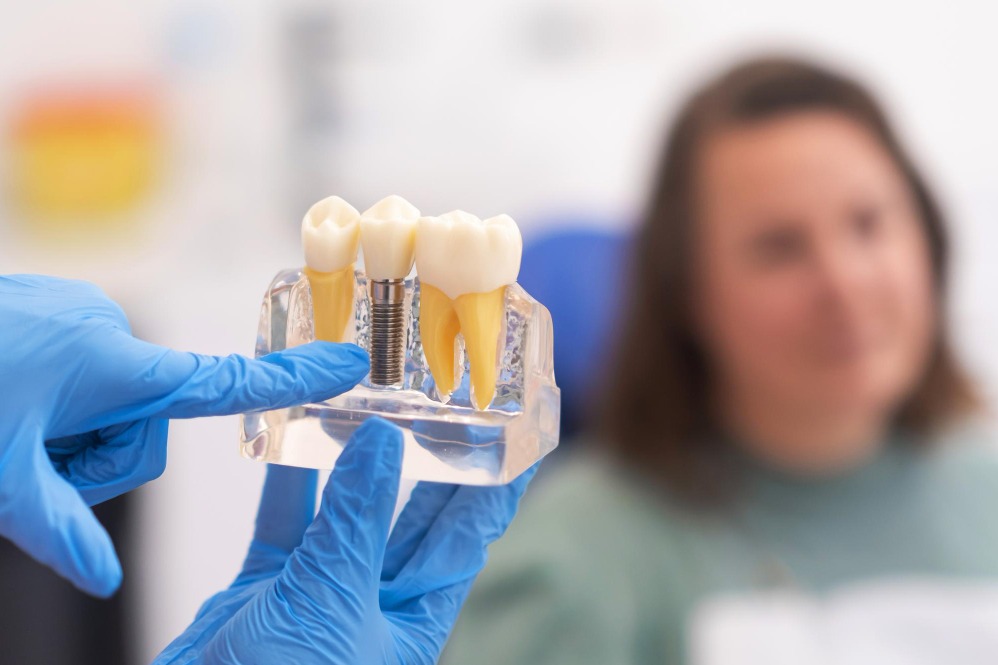
Losing a tooth affects more than the appearance of a smile. Depending on its position, a missing tooth can influence chewing, speech, bite stability, and the way neighbouring teeth function. Consultation with a Dental Implants Specialist in Bhukum can help patients understand whether an implant is an appropriate method of replacing a missing tooth.
Dental implants are designed to provide a stable foundation for replacement teeth. However, successful treatment requires careful assessment rather than simply placing an implant wherever a tooth is absent.
What Is a Dental Implant?
A dental implant is a fixture placed within the jawbone to support a dental restoration. After appropriate healing, it can be restored with a crown to replace an individual missing tooth.
Implants can also form part of treatment plans involving several missing teeth or more extensive tooth replacement.
The exact treatment plan varies considerably between patients because bone condition, gum health, bite forces, medical history, and the location of the missing tooth all influence planning.
Who May Be Suitable for Dental Implants?
Dental implants may be considered for adults who have lost teeth because of:
- Advanced decay
- Dental trauma
- Gum disease
- Failed previous dental treatment
- Congenitally missing teeth
- Teeth that cannot predictably be restored
Suitability cannot be determined from appearance alone. The dentist needs to examine the mouth and assess the supporting bone.
Why Bone Assessment Is Important
An implant depends on the surrounding jawbone for support. After a tooth is lost, the bone in that area can gradually change.
Dental imaging helps evaluate factors such as available bone height, width, neighbouring roots, and nearby anatomical structures. In selected cases, additional procedures may be required before implant placement.
This is one reason implant treatment should begin with detailed planning rather than assumptions based only on the visible gap.
What Does Implant Treatment Involve?
Treatment generally progresses through several stages.
First, the dentist evaluates the missing-tooth area, gum condition, bite, and overall dental health. Relevant X-rays and additional imaging may be advised.
The implant is then surgically placed when appropriate. A healing period allows the surrounding tissues to stabilise around the implant.
After satisfactory healing, the restorative phase begins. A replacement crown is designed to restore function and achieve a natural relationship with neighbouring teeth.
The duration of treatment depends on individual healing, bone condition, the number of implants required, and whether additional procedures are necessary.
Implant Care Does Not End After Treatment
Although an implant cannot develop tooth decay in the same way as a natural tooth, the tissues surrounding it still require consistent care.
Long-term maintenance includes:
- Brushing thoroughly every day
- Cleaning around the implant
- Attending recommended dental reviews
- Monitoring gum health
- Managing excessive bite forces when relevant
- Avoiding habits that may compromise oral health
Professional maintenance is especially important because inflammation around an implant can affect the supporting tissues.
Questions Worth Asking Before Treatment
Patients considering implants should understand why a particular treatment plan has been recommended.
Useful questions include how much bone is available, whether gum treatment is needed first, what type of restoration is planned, how long treatment may take, and what maintenance will be required afterward.
For someone searching for a Dental Implants Specialist in Bhukum, a detailed consultation at DantYug Dental Clinic can help establish whether implant treatment is appropriate for the missing tooth and surrounding oral structures.
Dental implants can provide an effective tooth-replacement option for suitable patients, but their success begins with careful diagnosis, realistic planning, and ongoing maintenance.